ATELIER FOR ____
2026
publication
funded by
Bundesministerium Kunst und Kultur
Land Salzburg
Land Steiermark
and LAB5550
additional texts
WAI Architecture Thinktank
Beste Ileri
publisher
Forum Stadtpark Verlag
can be ordered here
or directly via me
funded by
Bundesministerium Kunst und Kultur
Land Salzburg
Land Steiermark
and LAB5550
additional texts
WAI Architecture Thinktank
Beste Ileri
publisher
Forum Stadtpark Verlag
can be ordered here
or directly via me
“Dominium Terrae” is a powerful and unsettling exploration of humanity’s current trajectory and the futures we may be steering toward. Structured as a series of museums, each devoted to a distinct failure of the modern era, ranging from environmental collapse to economic inequality and social injustice, the book exposes the hidden costs of our systems and practices. Each exhibition serves as both a mirror and a warning, urging us to confront the consequences of inaction before they harden into disaster.
More than just critique, “Dominium Terrae” is a call to responsibility. It reminds us that the choices we make today will define the world of tomorrow. Through sharp analysis and strikingly imaginative storytelling, it challenges readers to envision and build a future that is more just, equitable, and sustainable. Thought-provoking, urgent, and deeply resonant, “Dominium Terrae” is essential reading for anyone concerned with the fate of our planet and the survival of our species.
More than just critique, “Dominium Terrae” is a call to responsibility. It reminds us that the choices we make today will define the world of tomorrow. Through sharp analysis and strikingly imaginative storytelling, it challenges readers to envision and build a future that is more just, equitable, and sustainable. Thought-provoking, urgent, and deeply resonant, “Dominium Terrae” is essential reading for anyone concerned with the fate of our planet and the survival of our species.


2026
short film
awards
Honorable Mention
VAEFF 2026,
New York, USA
funded by
Land Salzburg
Written, directed
Wilhelm Scherübl
Sound:
Julia Just
Voice:
elevenlabs.io
awards
Honorable Mention
VAEFF 2026,
New York, USA
funded by
Land Salzburg
Written, directed
Wilhelm Scherübl
Sound:
Julia Just
Voice:
elevenlabs.io
Dominium Terrae is a short film based on the book of the same name.
In a compact format, it brings to life the locations and scenarios from
the book, offering a glimpse into a world shaped by absence.
WE travel across Earth after the wealthy have fled to space, leaving most of humanity behind. A collective voice, belonging to those who remain, speaks of what is left: fragments of data, buildings baking in the sun, silence where there was once noise. Not much survives. But something lingers.
Through images and narration, the film builds an atmosphere of quiet doom, inviting viewers to witness what remains when everything else is gone.


2023
publication
narratives
objects
funded by
Land Salzburg
Residency Merida
Universidad de las Artes de Yucatán
La Cupula
narratives
objects
funded by
Land Salzburg
Residency Merida
Universidad de las Artes de Yucatán
La Cupula
This project imagines a dystopian reality in which the unchecked rise of soft drink consumption plunges a nation into crisis. Diabetes, obesity, and shortened lifespans spread rapidly as corporations aggressively market sugary beverages, especially to infants and children. Government regulations collapse under the pressure of profit-driven campaigns, leaving society overwhelmed by products that erode its health. The work exposes this clash between corporate power and human vulnerability, revealing how deeply consumption shapes culture and survival.
The installation brings this narrative to life through a series of objects: oversized bottles holding 20 liters and 5 liters stand as monumental forms mirroring the everyday dominance of soft drinks in local life, while a baby bottle extends the narrative with chilling effect, pointing to the deliberate targeting of the youngest consumers. Bottle caps collected from the streets serve as silent evidence of environmental neglect, and a sculpture of the sea completes the ensemble as a symbolic piece suggesting how capitalism penetrates even the most elemental forces of nature.
>more

2023
research
video
performance
funded by
Land Salzburg
in collaboration with
Bernadette Maria Leitner
Flavia Mazzanti
Manuel Bonell
music by
Julia Just
video
performance
funded by
Land Salzburg
in collaboration with
Bernadette Maria Leitner
Flavia Mazzanti
Manuel Bonell
music by
Julia Just
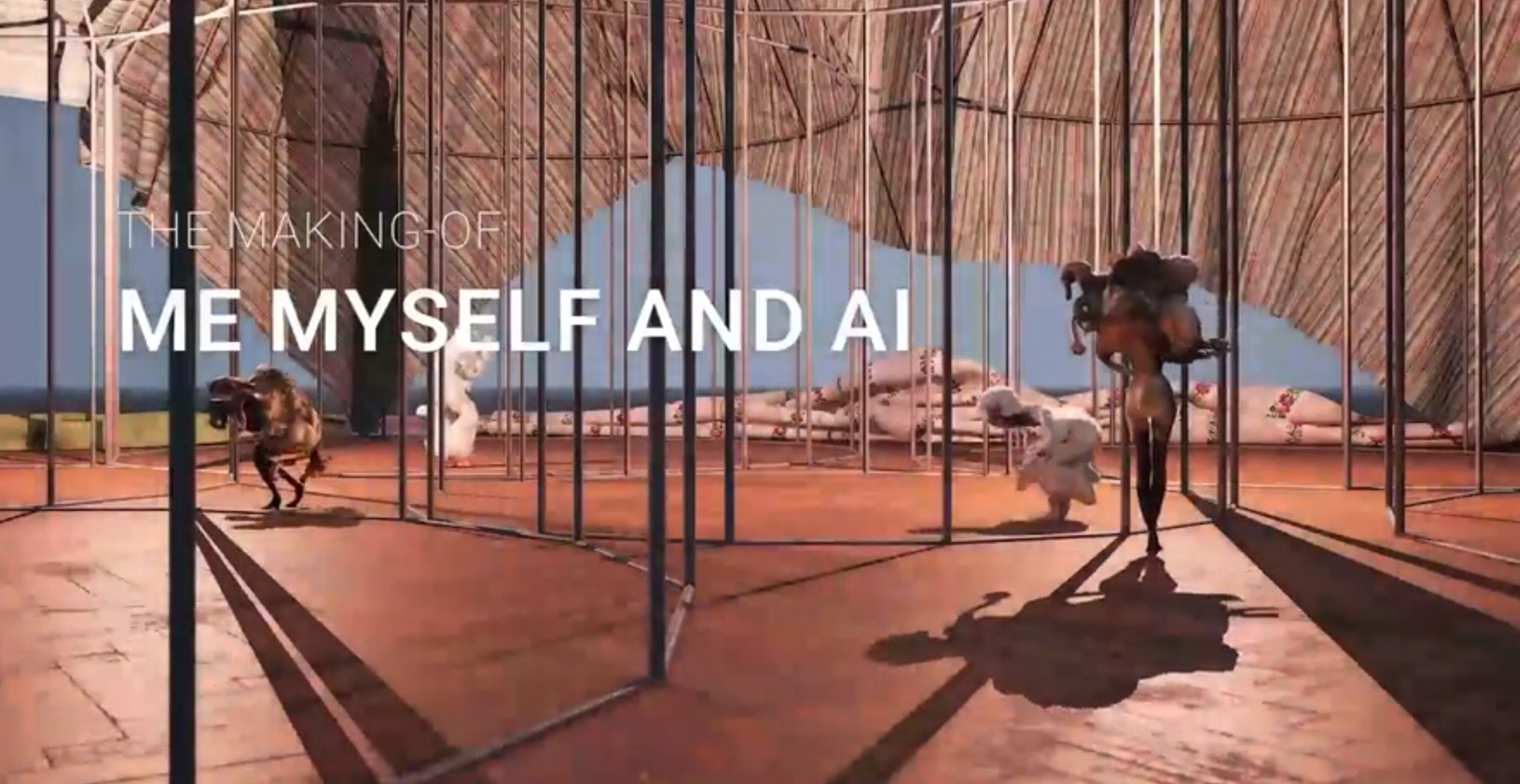
This research project explores digital self-expression and identity, from the casual play of Instagram filters to fully fictional personas. Its focus is empowerment: giving marginalized communities, especially those who don't identify with their biological bodies, tools for authentic representation. Using tracking suits, participants merge their Real Self with a Digital Self, creating new "bodies" to embody, test, and transform in virtual space. Avatars, often enhanced through AI, become vessels of desire, emotion, and imagination, reflecting identities as they could be, not just as they are.
Performers & Process
The project collaborates closely with performers, particularly transgender, non-binary, and gender-fluid individuals, who step into their digital doubles. Their gestures and emotions are translated into fluid, shape-shifting avatars inhabiting virtual worlds, raising questions about identity, embodiment, and how digital self-discovery echoes back into lived reality.
Outcome
The process culminates in a video work documenting the creation and evolution of these digital selves, a cinematic reflection on the interplay between body, technology, and identity's infinite possibilities.
>more
2019
installation
video
exhibited
AKT 1: Europa
in collaboration with
Philippe Jans
Therese Leick
Charlie Rauchs
video
exhibited
AKT 1: Europa
in collaboration with
Philippe Jans
Therese Leick
Charlie Rauchs
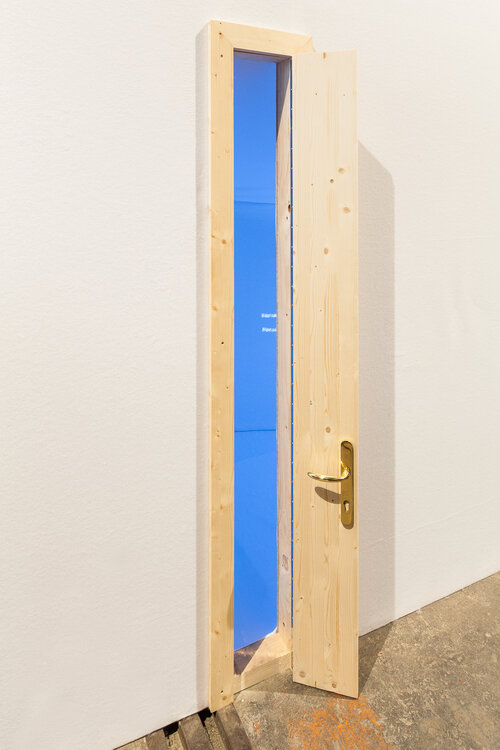
“I still believe that the principle is that the law has to follow politics and not politics the law.”
Herbert Kickl, FPÖ, 21.01.2019
This absurd statement serves as the starting point for a spatial installation that embodies its inherent contradiction. At the center stands a door, designed to defy convention and expectation. The entrance becomes both a literal and symbolic threshold, reflecting the distorted logic of populism, nationalism, and bigotry.
Inside, the room unfolds under the theme of Europe. A video plays recordings of people sharing their perceptions of the European Union, revealing diverse opinions, misconceptions, and hopes. The interplay of space, imagery, and narrative invites reflection on the fragile balance between law, politics, and ideology in shaping our collective future.
>more
2016
installation
video
photography
awards
Scholarship Architektur Preis Land Salzburg
exhibited
Initiative Architektur Salzburg
video
photography
awards
Scholarship Architektur Preis Land Salzburg
exhibited
Initiative Architektur Salzburg
The Illegal Project is an immersive art exhibition that uncovers the hidden spaces and untold stories of the city. It explores how individuals navigate urban environments in unconventional ways, from drug dealers and sex workers to homeless people and street artists, each one developing their own strategies to survive and assert their presence.
The exhibition combines video works, altered images, and sculptural objects to reveal the often-overlooked realities of illegal activity, along with the social, economic, and political systems that shape these lives. By confronting assumptions about who occupies the city and how, The Illegal Project provokes reflection on power, inclusion, and equity in urban spaces.
>more

2016
The image series deals with certain places or spaces in cities that we as passers-by often do not pay attention to or do not want to pay attention to. Their connection with drugs, homelessness or prostitution that cannot be reconciled with the generally accepted concept of life, let most people simply look away. By collaging and changing these places in the photos, the view should be directed precisely to the things we want to banish or hide from our "perfect" world.
>more
>more

2026
awards
Honorable Mention
Honorable Mention
A sauna and greenhouse retreat in the lava field near Mývatn in Iceland, designed as one building beside the existing house Púfa. The light, fully glazed greenhouse forms the outer envelope, and the sauna sits inside it as a dense, dark inner mass. Visitors can step straight into the sauna or wander through the plants first, with no single prescribed path. A modular timber frame on screw piles, lava stones gathered on site and passive ventilation keep the building light on the land and easy to remove.


2015
awards
1st Prize
in collaboration with
Therese Leick
1st Prize
in collaboration with
Therese Leick
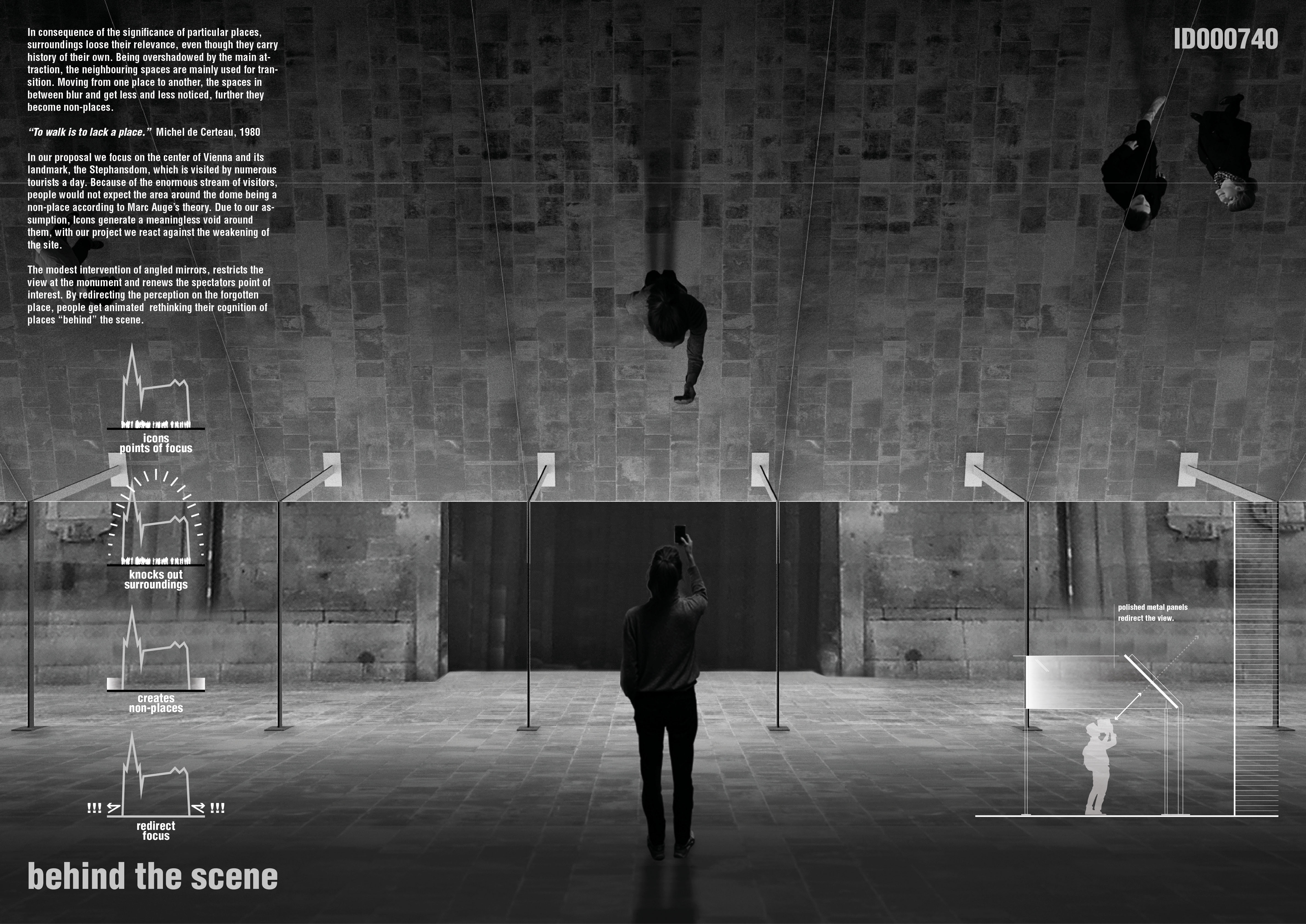
Some locations are so highly renowned that their surroundings consequently lose their relevance, even though they carry an important history of their own. Being overshadowed by the main attraction, these neighbouring areas are mainly used as transitional spaces. As people move between these places, the spaces begin blurring in the background and get less and less noticed until they become non-places.
The modest intervention of angled mirrors restricts the view of the monument and renews the spectator’s point of interest. By redirecting the visitors’ perception towards the forgotten places around the monument, people are led to rethink their acknowledgement of the spaces “behind” the scene.
The modest intervention of angled mirrors restricts the view of the monument and renews the spectator’s point of interest. By redirecting the visitors’ perception towards the forgotten places around the monument, people are led to rethink their acknowledgement of the spaces “behind” the scene.